ICCROM General Assembly Explores Culture as a Driving Force for Global Resilience
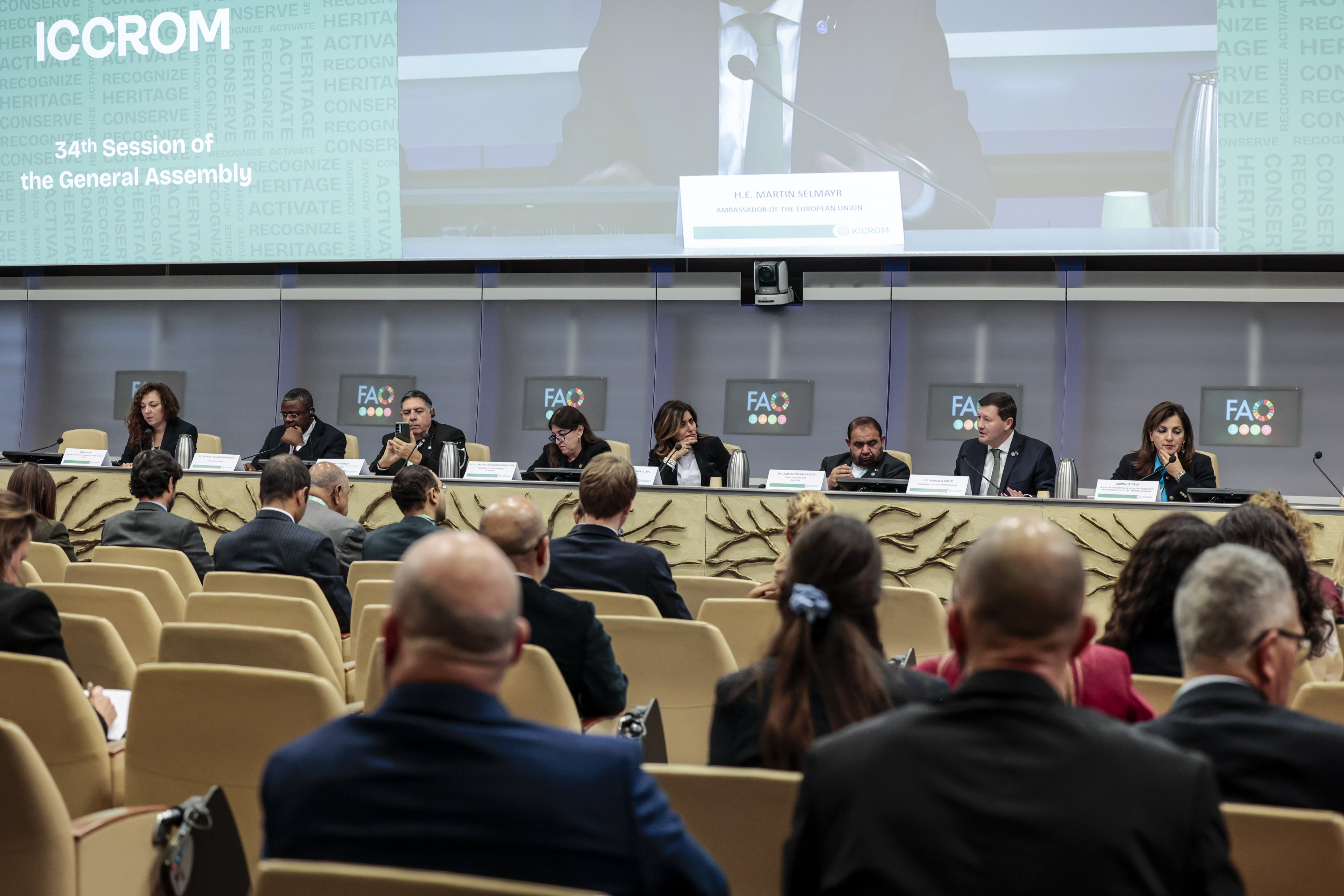
The 34th Session of ICCROM’s General Assembly brought together policymakers, cultural heritage professionals and diplomats for a high-level side event on “Culture–Climate nexus: the missing link.” Moderated by ICCROM Director-General Aruna Francesca Maria Gujral, the panel discussion explored how integrating culture into climate policy and disaster risk reduction strategies can create more sustainable pathways for communities worldwide.
At a time of unprecedented heatwaves, rising seas, and increasingly destructive storms, floods and wildfires, the event presented a critical exchange, highlighting the need to move beyond narrow sectoral approaches and adopt holistic strategies with culture as a central driver of adaptation.
The discussion underscored that culture – both tangible and intangible – embodies centuries of experience, local knowledge and shared values that guide communities through environmental change. When strategically mobilized, cultural heritage strengthens social cohesion, informs risk-aware behaviour and enhances community-led adaptation.
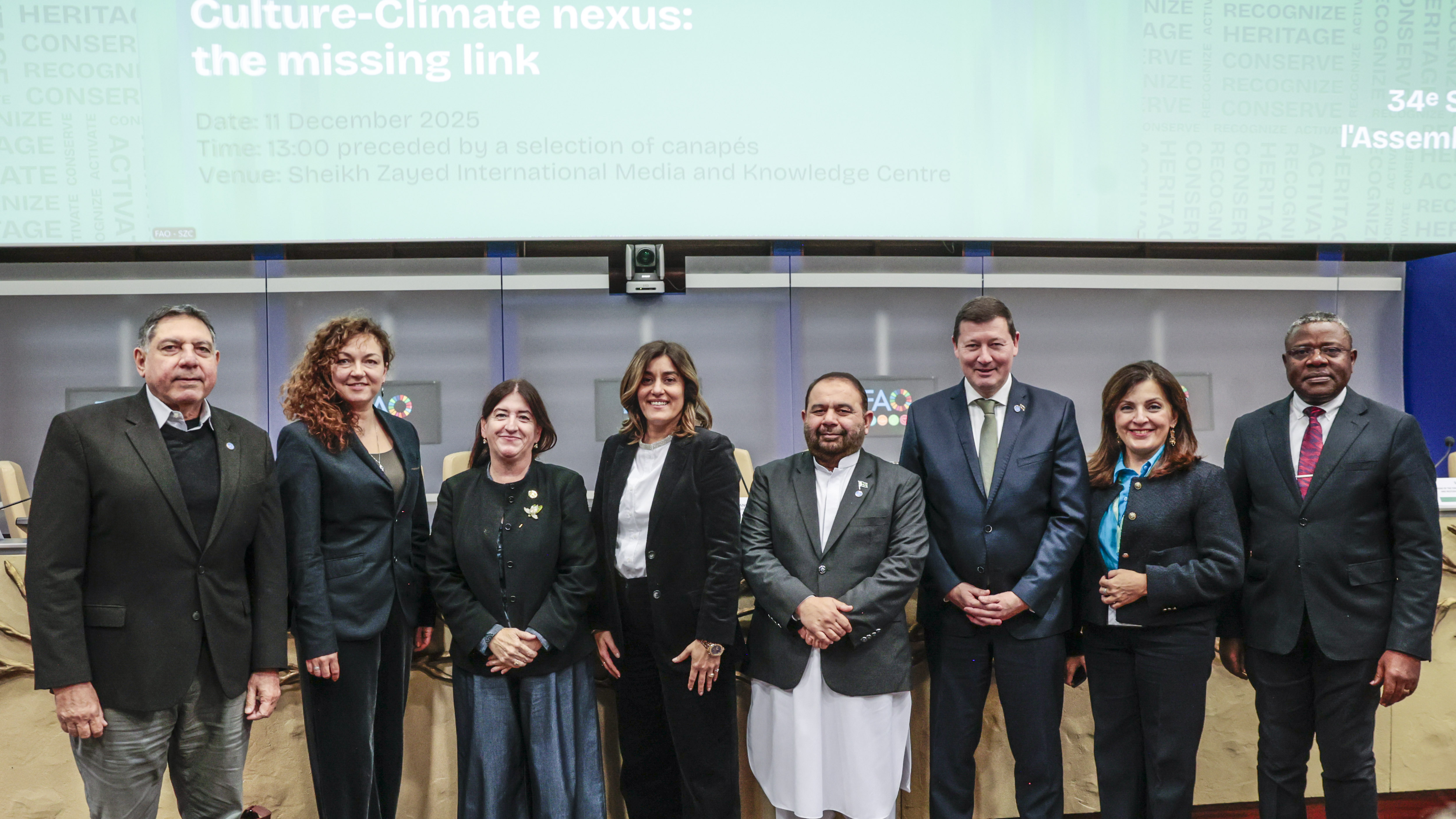
Panellists included the Minister of Culture and Sports of Guatemala, H.E. Lic. Liwy del Carmen Grazioso Immacolata; the Minister of Culture of Pakistan, H.E. Aurangzeb Khan Khichi; the Deputy Minister of Cultural Heritage of the Ministry of Culture of the Dominican Republic, H.E. Gamal Michelen; Ambassador of the European Union to the Holy See, the Order of Malta, the UN Organizations in Rome and to the Republic of San Marino, H.E. Martin Selmayr; Ambassador of Kenya to Italy and Permanent Representative to International Organizations in Rome, H.E. Fredrick Lusambili Matwang'a; Head of the State Service for Protection, Development and Restoration of Cultural Heritage under the Ministry of Culture of the Republic of Azerbaijan, Sabina Hajiyeva; and Director of the Office of National Cultural Heritage, Latvia, Inira Bula.
A key outcome of the session was the recognition that culture must move from the margins to the centre of climate and adaptation planning, requiring increased investment, cross-sector cooperation and integration into national and international policy frameworks. Real-world examples and takeaways shared by the speakers demonstrated the transformative role of culture for their countries and regions:
- Guatemala: The land holds a living identity, and human pressures are fracturing this relationship. Revitalizing ancestral practices and education was highlighted as essential to sustainable pathways.
- Pakistan: Despite contributing minimally to global emissions, the country faces severe climate impacts. Loss of landscapes from extreme weather also means the loss of cultural memory and identity. In response, Pakistan is mainstreaming cultural heritage into climate adaptation planning.
- The Dominican Republic: As a country located in the Caribbean’s hurricane belt, safeguarding heritage serves as a vital mechanism to support water systems, sustainable tourism and community cohesion, with strong interministerial collaboration playing a key role.
- The European Union: Culture needs to play a central role in climate policy. Reducing CO2 emissions is a top priority, and initiatives like the EU’s Green Heritage Project show how intangible heritage can be linked with climate action.
- Kenya: Culture is the essence of community identity and is inseparable from land. Indigenous knowledge underpins drought management, forest stewardship and locally led adaptation. The country has been strengthening its culture-climate nexus through investments in digital heritage, capacity building, and the creative economy, and reaching the youth.
- Azerbaijan: The country has been taking a green transformation approach with its Culture for Climate programme launched during its COP29 Presidency. It leverages traditions, art and heritage to drive behavioural change and sustainable solutions.
- Latvia: The risks to landscapes and built heritage call for early education and the revival of traditional architectural and land stewardship practices.
Across all interventions, participants agreed that culture is the connective tissue of resilience – anchoring identity, strengthening social capital and supporting communities as they navigate escalating climate risks. Disaster risk reduction and climate adaptation can no longer be siloed, and culture must be recognized as an enabling force linking both domains.
The panel concluded with a shared commitment to scale up efforts to safeguard and activate cultural heritage as a strategic resource for resilience. Recognizing that climate impacts on heritage are a global challenge, participants emphasized the need for all stakeholders to collaborate and for international organizations to take a leading role. ICCROM looks forward to continued partnership to fully integrate culture into global climate strategies – strengthening communities, protecting identities, and advancing sustainable solutions for people and the planet.