
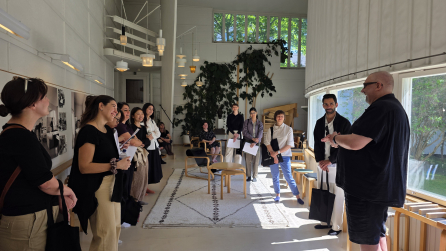
The in-person component of the 5th International Course on Conservation of Modern Architecture (MARC 2026): Modernism in Flux is currently underway in Finland, bringing together 26 heritage professionals from 23 countries to explore innovative approaches to conserving, sustaining, and reusing twentieth-century architectural heritage. Organized by the Alvar Aalto Foundation in partnership with ICCROM and the Finnish Heritage Agency, and supported by Aalto University, Senate Properties, and the City of Jyväskylä, the course marks the revival of an internationally renowned training programme that was last held in 2011.
Building on a long tradition of international cooperation in modern heritage conservation, the course provides a unique platform for interdisciplinary exchange, professional networking and hands-on learning.
The 2026 edition, titled Modernism in Flux, examines the conservation of modern architecture through the lens of three interconnected themes: Conservation, Sustainability, and Re-Use. These themes reflect the growing need to address the dynamic challenges facing modern heritage, including climate change, changing societal needs, material deterioration, adaptive reuse, and long-term stewardship.
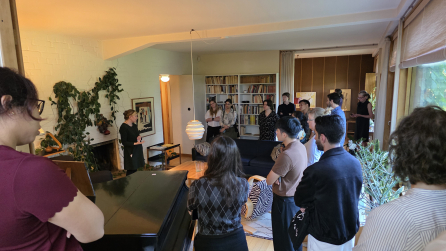
The programme consists of four modules that combine online learning with an intensive on-site component currently taking place in Finland. Through lectures, guided visits, field exercises, and workshops, participants are engaging directly with some of the most significant works of Finnish architect Alvar Aalto (1898–1976), whose human-centred modernism continues to influence architectural thinking worldwide.
Learning activities are being hosted at several iconic Aalto sites, including Studio Aalto in Helsinki (1955), Aalto University's Otaniemi Campus in Espoo (1964–69), and Säynätsalo Town Hall in Jyväskylä (1952). Participants are also visiting a wider range of modern architectural landmarks, including Finlandia Hall, the University of Jyväskylä campus, the Muuratsalo Experimental House, and other notable examples of modern architecture and contemporary interventions.
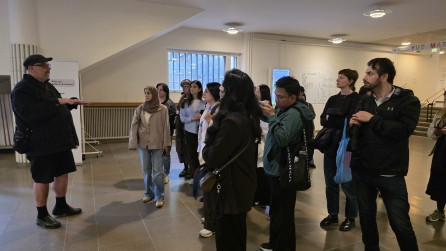
The course programme gathers leading experts from Finland and abroad to address key issues in modern heritage conservation. A distinctive feature of MARC 2026 is its emphasis on site-based learning. By studying modern architecture within its original context, participants are encouraged to critically examine how conservation, sustainability and reuse can be balanced while maintaining the cultural significance of modern buildings. Workshops and field exercises provide opportunities to apply theoretical concepts to real conservation challenges and to exchange experiences from diverse international contexts.
By equipping heritage professionals with the knowledge, skills and critical perspectives needed to address the evolving challenges facing twentieth-century architecture, MARC 2026 advances ICCROM’s Strategic Direction 1, Priority Area 1, aimed at strengthening conservation capacities, and promoting more adaptive risk-informed approaches. In doing so, the course contributes to long-term resilience of modern heritage in a rapidly changing world.