
Cultural heritage is not static. It is continuously shaped, reimagined, contested, and sustained through social, cultural, political, and economic processes. People engage with heritage to affirm identity, claim ownership, access resources, and exercise agencies in navigating an uncertain present while shaping possible futures. As artificial intelligence increasingly mediates how we see, record, and interpret the world, a critical question arises: What role can AI play in documenting, describing, safeguarding, and sustaining cultural heritage – without eroding the humanvalues at its core?
This single, compelling question anchored ICCROM’s Ctrl+S Culture: AI and Heritage in a Digital World conference and resonated across disciplines, regions, and professional roles.
From around the world, professionals at the intersection of cultural heritage and digital innovation came together to share ideas, challenges, and possibilities. 2,398 participants from 145 countries joined the conversation, representing museums, libraries, and archives, research institutions and universities, government bodies, cultural and creative industries, and community-based heritage organizations.
Across three days of keynotes, panels, workshops, and hands-on sessions, the conference created a shared space where practice met research, policy engaged with field experience, and creativity informed critical debate. The scale and diversity in the room – paired with a shared sense of urgency and hope – set a powerful and inspiring tone for reflecting on safeguarding heritage in a rapidly evolving digital world.
Day One – Urgency, Innovation, and Responsibility
Day One opened with a forward-looking focus on how artificial intelligence is transforming cultural heritage. Sessions highlighted AI-powered risk analysis, digital documentation, climate-related monitoring, and the growing need for ethical governance and community-centred approaches. Speakers showcased tools already supporting disaster risk management, climate resilience and conservation practice – from deep learning, and explainable machine learning to augmented restoration techniques and large language models – before closing withreflections on equity, transparency, data sovereignty, and building responsible and inclusive AI ecosystems for heritage.
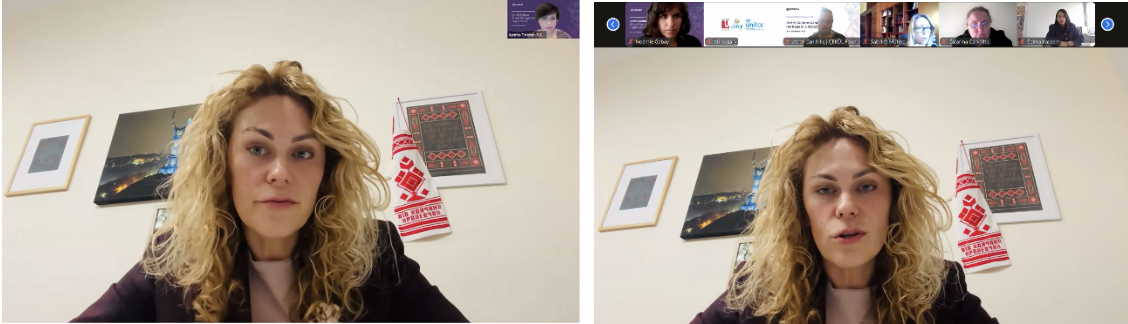
A defining moment came with the keynote: The Future of Cultural Heritage: AI Technologies Between Protection, Restoration and Ethical Challenges. The presentation provided a compellingperspective on how digitization and AI can help protect cultural heritage amid conflict, instability, and environmental crises. Highlighting predictive modelling and remote sensing, the keynote emphasized that sustained innovation is essential as threats evolve – while reinforcing that people remain at the heart of heritage protection. Robust datasets and technological infrastructures are vital for cultural resilience, but on-site expertise, local knowledge, and manual skills remain irreplaceable. AI, the speaker argued, should extend human capacity, enabling faster insights and stronger situational awareness when time-sensitive decisions determine the survival of heritage.
Day Two – Decoding Heritage
Day Two continued this momentum by examining what it means to decode heritage through artificial intelligence. Panels explored how the capabilities of multimodal AI can betterunderstand cultural context and community preferences, while underscoring that participatory engagement must be rooted in collaboration, rather than technological substitution.
The day included advances in documentation systems, ontology development, intangible heritage reconstruction, archaeological pattern identification, and policy frameworks supportingethical and validated AI use. Community-led initiatives featured prominently, including work on oral tradition recording, culturally sensitive storytelling methods, and accessibility tools that make heritage more inclusive. Revisiting Collections and Rethinking Possibilities
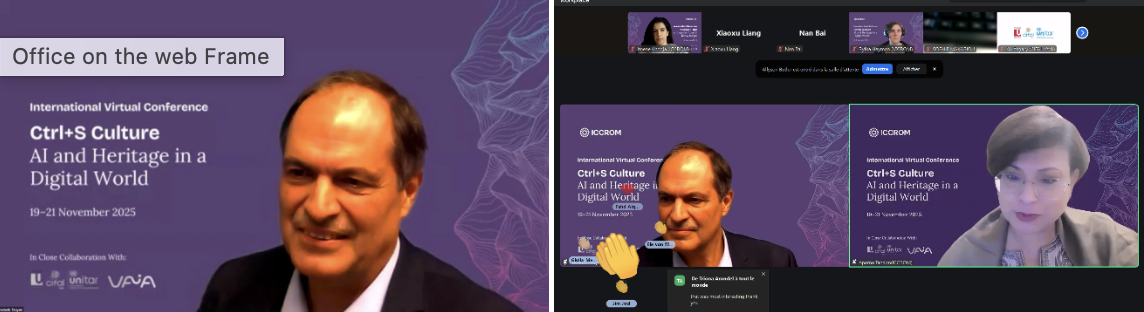
A standout keynote Uses and Promises of AI Solutions for Heritage Institutions, invited participants to rethink what is possible with existing tools and datasets. Emphasis was placed on encouraging institutions to bring their resources together through interoperable frameworks and using artificial intelligence to revisit collections, reduce bias, and reveal overlooked patterns, while producing new interpretations. Perhaps the most compelling observation was that AI should not remain confined to backend processes but can also play a transformative role on the front end, where visitors and communities encounter heritage directly. By reimagining how audiences explore and interact with collections, exhibitions, and narratives, artificial intelligence can become a mediator that enriches cultural experience rather than an invisible background mechanism.
AI as Creative Partner
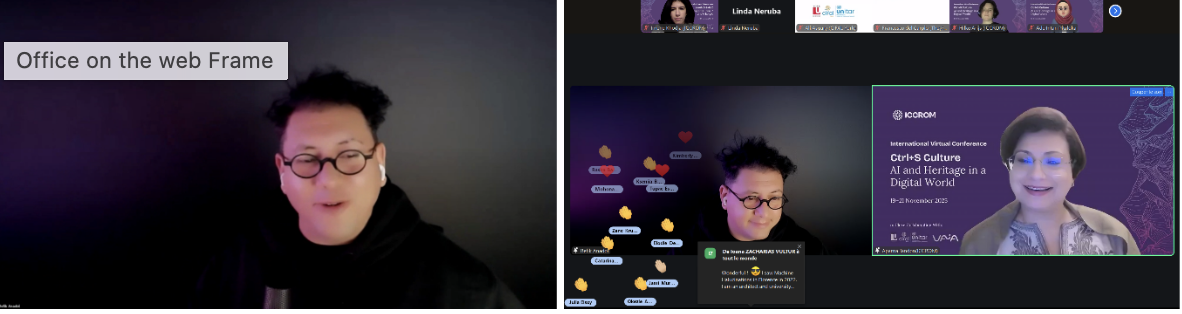
The session Can Machines Dream About Art? complemented the discussions by exploring artificial intelligence as a creative collaborator in cultural production. Drawing on the speaker’s artistic practice, it showed how AI can transform large datasets into immersive aesthetic experiences, revive analogue artworks, reanimate archival materials, and even bring unrealizedarchitectural visions, such as Gaudí’s projects, back into the public imagination. AI emerged not merely as a technical tool but as an artistic ecosystem that expands the expressive and emotional reach of cultural heritage.
Day 3 – The Value of Data
Day three continued this line of inquiry, examining how artificial intelligence can act as a catalyst for new forms of cultural creativity. Speakers illustrated how emerging techniques cangenerate innovative narrative structures, recover fragile or fragmented cultural memories, and broaden access to creative and curatorial practices – all while reinforcing the importance ofethical, justice-oriented design that supports cultural rights, community agency, and lived experience rather than overshadowing or replacing them
The Keynote Neck-deep in Digital Oil? Public Broadcasting Archives as AI Training Datasets pointed to the critical importance of well-curated datasets for the training of artificial intelligence. Audiovisual archives were framed as high-value raw material with largely untapped potential. The session also noted the growing demand for reliable, human-curated data, which could createnew pathways to fund and sustain struggling archives. Furthermore, the predominance of Western-sourced data in AI training has implications for AI capability and bias.
Broadening the dataset diversity is essential for equitable AI and creates opportunities for institutions in the Global South and other underrepresented regions to contribute decisively to global digital ecosystems.
A Global Community in Exchange
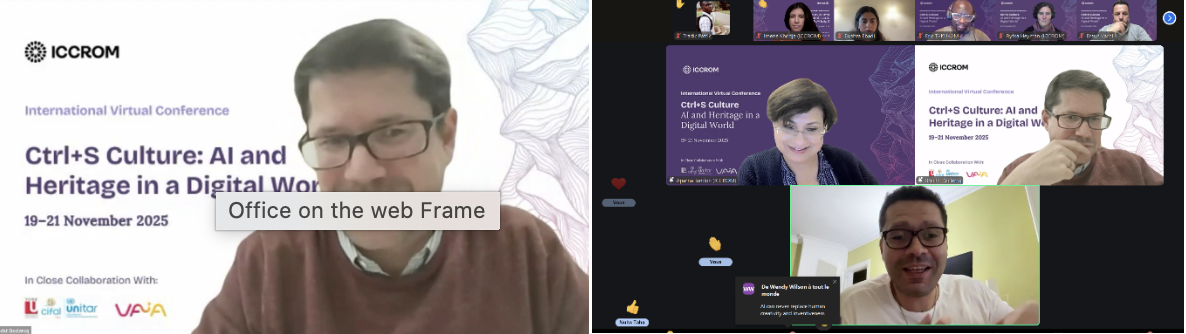
The conference stood out for its emphasis on genuine knowledge exchange. Participants shared fieldwork experiences, case studies, and active projects that extended far beyond traditional academic research. Presentations ranged from emergency documentation in conflict zones and AI-driven museum visitor analytics to community-led data interpretation, and Indigenous knowledge frameworks that challenge existing digital conventions. This diversity gave the gathering a distinctly global and practice-based character.
The insights shared during Ctrl+S Culture will grow in relevance as AI becomes more deeply embedded in the heritage sector. The conference proceedings, to be published in the spring of 2026, will further explore the themes, ideas, and innovations presented. Ultimately, Ctrl+S Culture demonstrated that the future of cultural heritage lies in a partnership between technological ingenuity and human expertise, supported by a global commitment to responsible and inclusive digital transformation.