Strengthening the management system of heritage places with multiple international designations
Organizers
Global Research and Training Centre for Internationally Designated Area (GCIDA), ICCROM and IUCN through the World Heritage Leadership Programme (WHL)
Why
The course “Managing Multi-Internationally Designated Areas (MIDAs) effectively: Strengthening the management system of heritage places with multiple international designations” focuses on enhancing understanding of how to manage Multi-Internationally Designated Areas (MIDAs) - sites where there is a full or partial spatial overlap between two or more international designations under the Ramsar Convention on Wetlands, the World Heritage Convention, the UNESCO Man and the Biosphere (MAB) Programme, and UNESCO International Geoscience and Geoparks Programme (IGGP) - with particular attention to World Heritage properties that are also internationally designated as Biosphere Reserves, UNESCO Global Geoparks, and Ramsar Sites and understanding the needs of MIDAs and including the differences between diverse international designations (objectives and purpose). The course marks the third edition of the series of workshops organized by GCIDA on MIDAs since 2024.
During the course, participants will reflect on how integrating various international designations in the management of internationally designated areas can support site managers and professionals. This integration enables the analysis of management challenges in the current context and prepares them for future changes and developments. This also contributes to creating a more robust management system for the heritage place.
The course will also provide site managers with tools and knowledge to conduct management effectiveness assessment using the methodology of the Enhancing Our Heritage Toolkit 2.0 to analyse the management system and identify what can be improved and strengthened, as well as diverse tools and resources to build capacities in the conservation and management of heritage places that are MIDAs.
How
The foundational concept of the course is the heritage place approach to heritage management, which focuses on understanding how to conserve and enhance the multiple values of heritage places in their wider social, environmental, and economic contexts. This includes applying place-based and people-centred approaches when working with diverse actors and within different frameworks of other international designations. The course will also look at the specificities of different international designations to identify areas where these can support each other, as well as potential conflicts that need to be resolved through the management of the heritage place.
In this course, MIDAs are approached as places where different international designations – each with their own distinct objectives and management requirements – operate in parallel. The course explores how to move beyond fragmented or potentially competing priorities and instead promote more coordinated and integrated approaches to managing these places.
Recognizing the need to adapt to changing times and realities, the course provides a general overview of what constitutes a heritage management system. By understanding how such a system functions, it becomes possible to evaluate its operation and performance, including how the different purposes and requirements of different international designations can be integrated, and discuss challenges and opportunities of working with areas with multiple international designations.
This course is based on resources produced through the WHL, including the new World Heritage Management Manual (2026) and the Enhancing our Heritage Toolkit 2.0 (EOH 2.0). Furthermore, it draws on resources developed to support MIDAs, such as the IUCN publication Managing MIDAs: Harmonising the management of Multi-Internationally Designated Areas: Ramsar Sites, World Heritage sites, Biosphere Reserves and UNESCO Global Geoparks (2016), the upcoming IUCN publication Managing MIDAs 2.0, and other relevant resources.
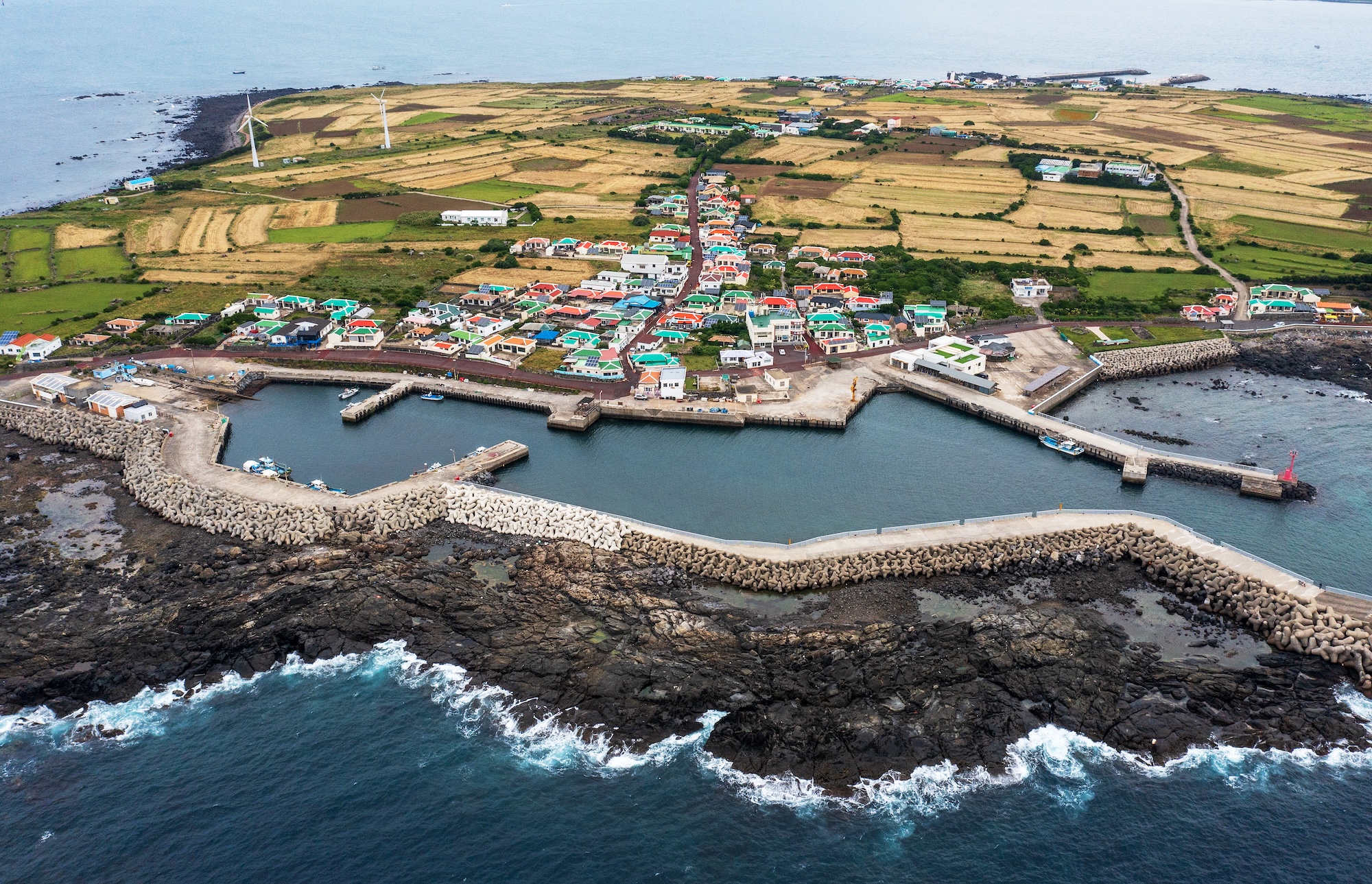
The case study of Jeju – inscribed as a World Heritage property as well as under all Ramsar and UNESCO designations – will be used as a shared case study to explore how multiple designations are managed, examining how different values are understood, the requirements of different designations, and the governance arrangements put in place to ensure its long-term effective protection.
Additionally, the experiences and approaches implemented by participants and resource persons at their own protected areas and heritage places that are MIDAs will provide the base for better understanding heritage management in the international context and fostering peer learning and knowledge sharing throughout the course.
Who should apply?
The course will bring together approximately 20 participants from the following regions: Asia and the Pacific, Africa, Arab States and Caribbean SIDS.
Participants should represent site management offices, institutions, protected area agencies and organizations, as well as heritage conservation professionals and members of communities engaged in the management of World Heritage properties that are also designated under other international designations such as Biosphere, Reserves, UNESCO Global Geoparks, and/or Ramsar Sites that are MIDAs.
Please note that only places designated under two or more international designations, or internationally designated areas currently pursuing an additional international designation, will be considered for this course.
Course fees and scholarships
Selected participants will not be required to pay a course fee.
Limited travel scholarships will be available for selected participants from Africa, Arab States, Asia, and the Pacific, and Caribbean SIDS. These scholarships will cover round-trip travel and visa costs.
Accommodation, meals and local transportation during the course will be provided by the course organizers.
How to apply for this course
Interested candidates must complete the online course application form by 29 May 2026.
Required application materials:
- Portrait photo (formats: jpg, jpeg, png, tif, tiff; max. 5 MB)
- Official endorsement letter (formats: pdf, doc, docx, jpg, jpeg, png, tif, tiff; max. 5 MB)
- Curriculum Vitae (formats: pdf, doc, docx; max. 5 MB)
- A personal statement (around 500 words) describing:
- The applicant’s connection to an internationally designated area that is a MIDA, explaining their role in the management of these international designations;
- How place-based and people-centred approaches are reflected in the applicant’s current work;
- How participation in the course will contribute to the applicant’s professional development and the work.
(formats: pdf, doc, docx; max. 5 MB)
For further information, please contact whl@iccrom.org.