
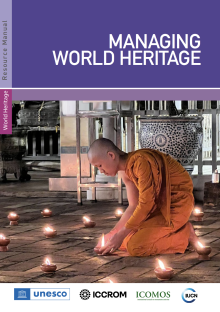
UNESCO and the Advisory Bodies to the World Heritage Committee – ICCROM, ICOMOS, and IUCN – have announced the release of a new manual, Managing World Heritage, a foundational reference document to guide conservation in World Heritage and other heritage places, outlining the key elements and processes of the management system.
World Heritage faces a wide range of challenges, including urbanization, new developments, disasters, climate change and inadequate maintenance and conservation. To address these issues effectively, site managers must adopt integrated and collaborative management approaches that bridge nature and culture, working closely with various agencies and institutions.
A total of 170 States Parties have properties inscribed on the World Heritage List, while 147 States Parties have encountered management challenges that prompted the Reactive Monitoring process. This manual serves as a go-to reference for site managers, institutions, rights-holders, heritage professionals and stakeholders involved in World Heritage. It provides guidance on the key elements required for robust heritage management systems and offers insights into navigating management processes towards more effective management plans.
Additionally, it emphasizes the need to consider social, economic and environmental contexts, ensuring that heritage plays a meaningful role in the life of the community.