
Twenty-five heritage professionals from around the World came together in Ayutthaya, Thailand, for the 2nd Training Workshop on Heritage Impact Assessment in Southeast Asia. The course focused on strengthening capacity to use impact assessment as a practical tool for protecting heritage while supporting sustainable development locally.
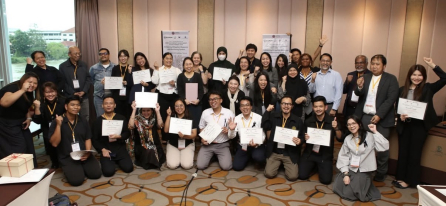
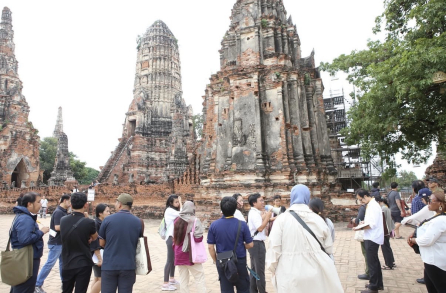
ICCROM, through its World Heritage Leadership (WHL) Programme implemented in partnership with IUCN, together with SEAMEO SPAFA – SEAMEO Regional Centre for Archaeology and Fine Arts – jointly organized this capacity-building workshop, with support from the Korea Heritage Service and the Government of the People’s Republic of China. The course was delivered in a blended format in two parts: an online workshop from 28–30 October 2025, followed by an in-person session at the World Heritage property of the Historic City of Ayutthaya in Thailand from 17–21 November 2025.
The workshop brought together 25 participants from Albania, Brunei Darussalam, Egypt, Indonesia, the Lao People's Democratic Republic, Malaysia, Nigeria, Pakistan, the Philippines, Saudi Arabia, Singapore, and Thailand, representing organizations engaged in both natural and cultural heritage conservation, as well as institutions and agencies involved in planning and development. This diversity of professional backgrounds and contexts enriched the discussions, enabling meaningful knowledge exchange, sharing of lessons learned, and insightful case study comparisons.
This event also marked the first impact assessment course jointly organized by ICCROM and SEAMEO-SPAFA, strengthening their long-standing partnership in capacity building for heritage conservation and disaster risk management.
The methodology for impact assessment in a World Heritage context
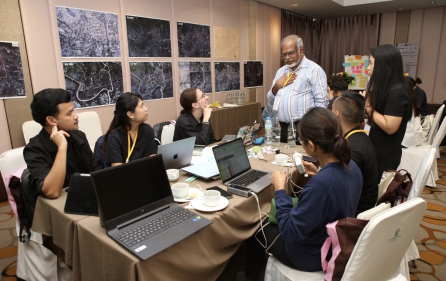
The content of the course was based on the Guidance and Toolkit for Impact Assessments in a World Heritage Context. The online component introduced the foundational theory and principles of impact assessment, explained its role in World Heritage processes, and outlined the 11-step methodology for assessing impacts of proposed projects as set out in the Guidance and Toolkit.
Building on this foundation, the in-person workshop focused on translating theory into practice. Participants worked in groups to assess four fictitious project proposals for the Historic City of Ayutthaya, identifying potential impacts and systematically applying each step of the methodology.
Impact assessment as a tool to promote good and sustainable development
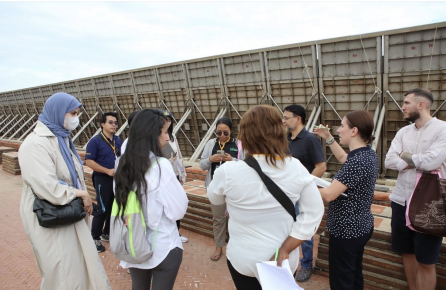
A central theme of the course was the role of impact assessment in supporting good planning and decision making, ultimately leading to projects that better contribute to sustainable development. Participants explored how the process not only protects heritage but also provides a structured framework for guiding projects that enhance community well-being and deliver essential benefits to people.
The workshop emphasized the importance of both mitigating negative impacts and enhancing positive outcomes, demonstrating how impact assessment can help shape development that reinforces conservation objectives and achieves sustainable outcomes.