 International Centre for the Study of the Preservation and Restoration of Cultural Property
 Publications

Leveraging Cultural Heritage Conservation for Inclusive Growth with Communities
Drawing on case studies from Southeast Asia, this learning document brings together research and field experience to explore how cultural heritage can function as a shared asset. It highlights approaches that foster participation, strengthen local capacities and enable communities to engage with and benefit from and shape the future of their heritage. In this sense, inclusive growth emerges not as a predefined model, but as a process rooted in local realities and driven by those most closely connected to them.
Managing World Heritage
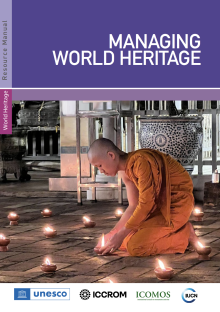
UNESCO and the Advisory Bodies to the World Heritage Committee – ICCROM, ICOMOS, and IUCN – have announced the release of a new manual, Managing World Heritage, a foundational reference document to guide conservation in World Heritage and other heritage places, outlining the key elements and processes of the management system.
The Heriland Handbook
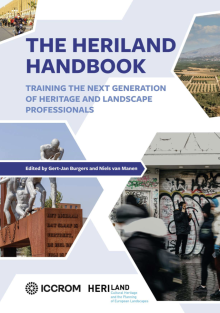
This publication marks a key outcome of the Heriland European Doctoral Programme and presents a forward-looking agenda for research and training at the intersection of cultural heritage and spatial planning. Published with ICCROM, the handbook brings together innovative perspectives on how heritage, landscape, and planning can be better connected in education and practice.
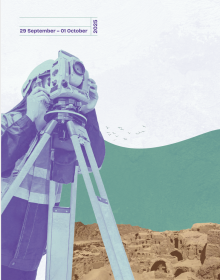
Abstracts of The 5th Arab Forum for Cultural Heritage 2025
This year’s edition is held under the theme, “The Role of Women and Youth in Cultural Heritage Conservation and Museum Innovation.” It highlights women as guardians and transmitters of cultural knowledge and emphasizes youth as innovators in heritage preservation. Discussions focus on empowering communities, promoting intergenerational dialogue, strengthening cultural resilience, and shaping inclusive policies that ensure heritage remains relevant in a rapidly changing world.
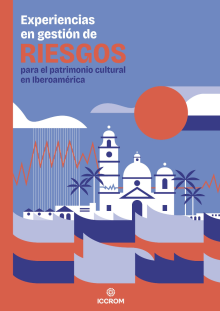
Experiencias en gestión de riesgos para el patrimonio cultural en Iberoamérica
Este volumen ofrece un panorama diverso de iniciativas, proyectos y reflexiones en torno a la gestión de riesgos que enfrenta el patrimonio cultural en contextos cada vez más complejos, incluyendo fenómenos naturales, factores antropogénicos y los efectos del cambio climático, con el objetivo de fortalecer capacidades, compartir experiencias y abrir nuevos espacios de diálogo y cooperación para su protección.
Heritage Samples Archives: A Guide for Management, Now Available!
The Heritage Samples Archives: A Guide for Management aims to improve the care and preservation of these collections – ensuring they remain accessible, meaningful, and protected for future use.
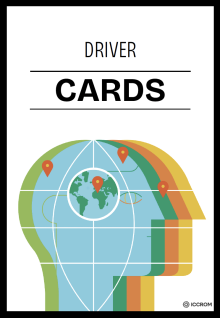
Heritage 2035 Driver Cards
This deck of cards presents 25 forces of change (or ‘drivers’) that are shaping our world, organized around societal, technological, environmental, economic, and political themes. Unlike trends, which are patterns of activities operating over a shorter term, drivers represent clusters of many trends that form deeper structural dynamics of change over a longer time horizon, even upwards of 50 years. Drivers, which emerge and recede gradually, are not likely to be reversed.

Conversaciones... con Roberto Pane | Número 12
Dedicamos dos números de Conversaciones… a Roberto Pane (1897-1987), un personaje singularmente importante, pero que en algunos países se conoce poco, en particular fuera de Europa. Roberto Pane, originario de Taranto, pero quien vivió sobre todo en Nápoles, fue no sólo un humanista y arquitecto, sino además dibujante, fotógrafo y prolífico escritor.