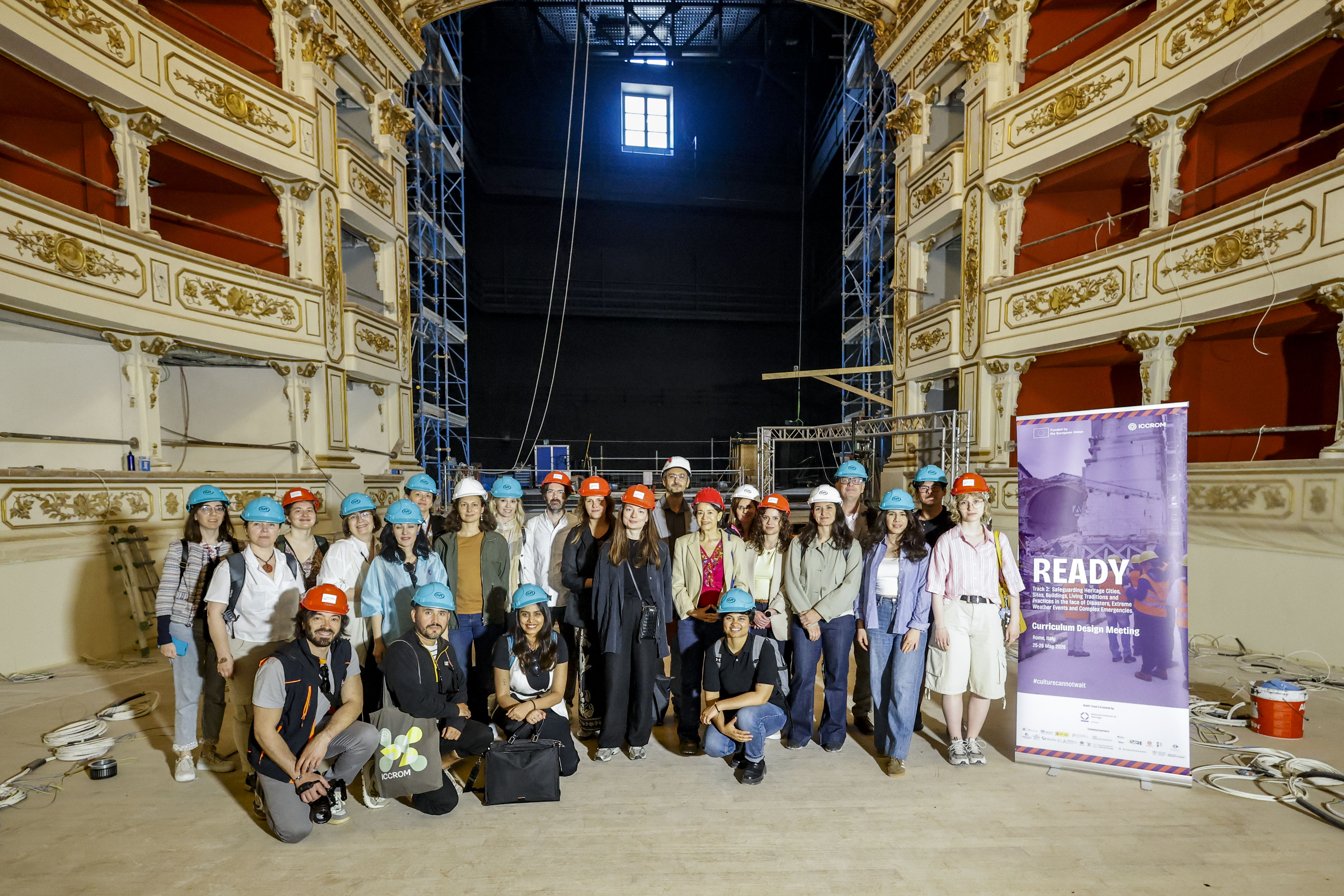
Technical partners and area specialists from across Europe and beyond gather in Rome to co-design READY Track 2.
Cultural heritage is shaped through the dynamic interactions between people and their wider social, environmental, economic, and governance contexts. In times of crisis, it can reinforce continuity, identity, and belonging. Yet across Europe and beyond, climate extremes, conflict, environmental degradation, depopulation, and urban transformation are placing growing pressures on both heritage and the communities connected to it – heightening the need for professionals equipped to anticipate, prepare for, and respond to increasingly complex and interconnected risks.
To address this challenge, 19 experts from the 17 technical partner institutions joined area specialists from across and beyond Europe for the READY Track 2 Curriculum Design Meeting, held in Rome on 25–26 May 2026.
READY – Safeguarding Cultural Heritage from Disasters, Extreme Weather Events and Complex Emergencies, is a 41-month initiative implemented by ICCROM in partnership with the European Commission’s Directorate-General for Education, Youth, Sport and Culture (DG EAC) and funded by the European Union through the Creative Europe Programme.
Building on the successful implementation of READY Track 1 - the first year of READY training dedicated to safeguarding heritage collections, living traditions, and practices in the face of disasters, extreme weather events, and complex emergencies - the partners and area specialists gathered around one central question:
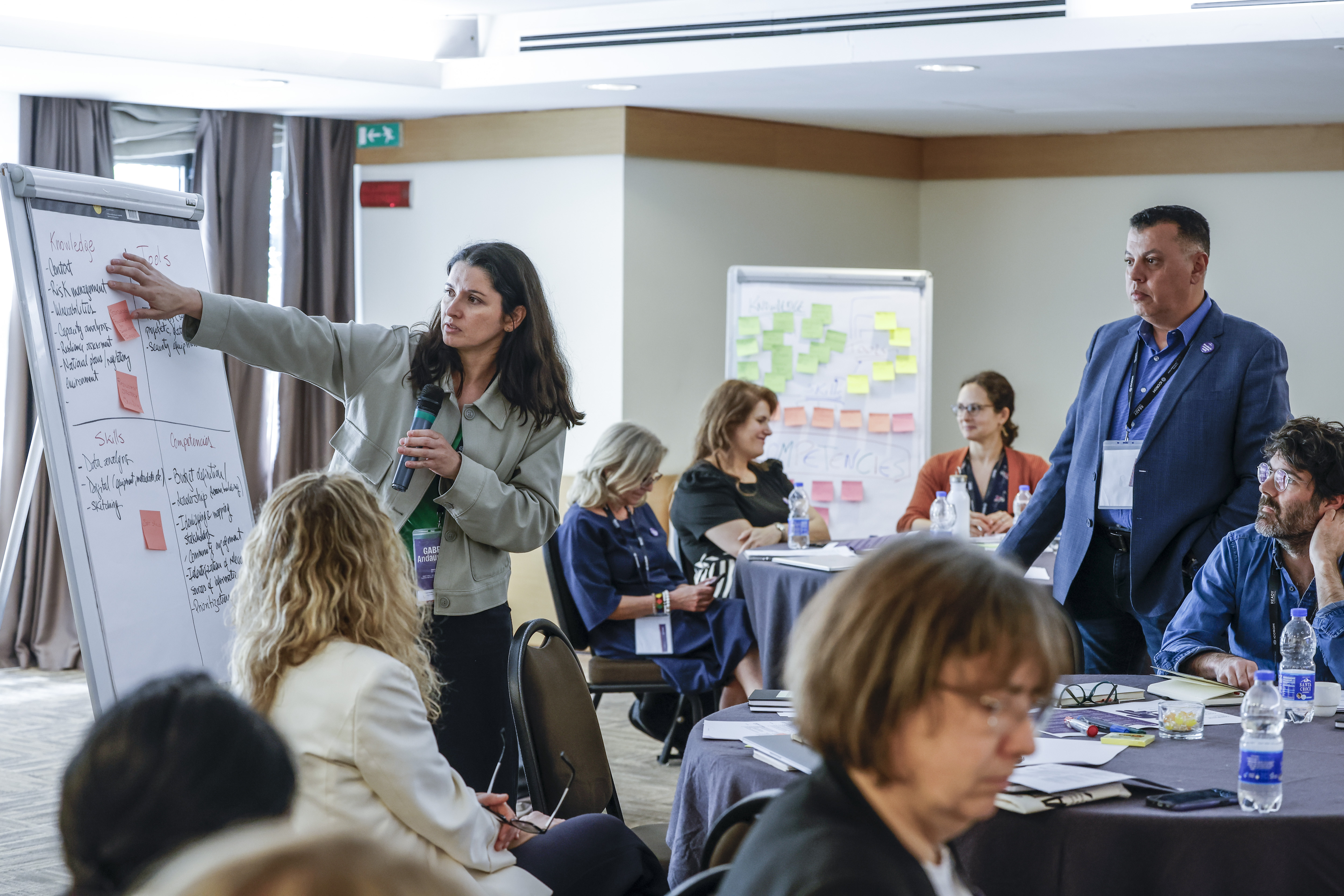
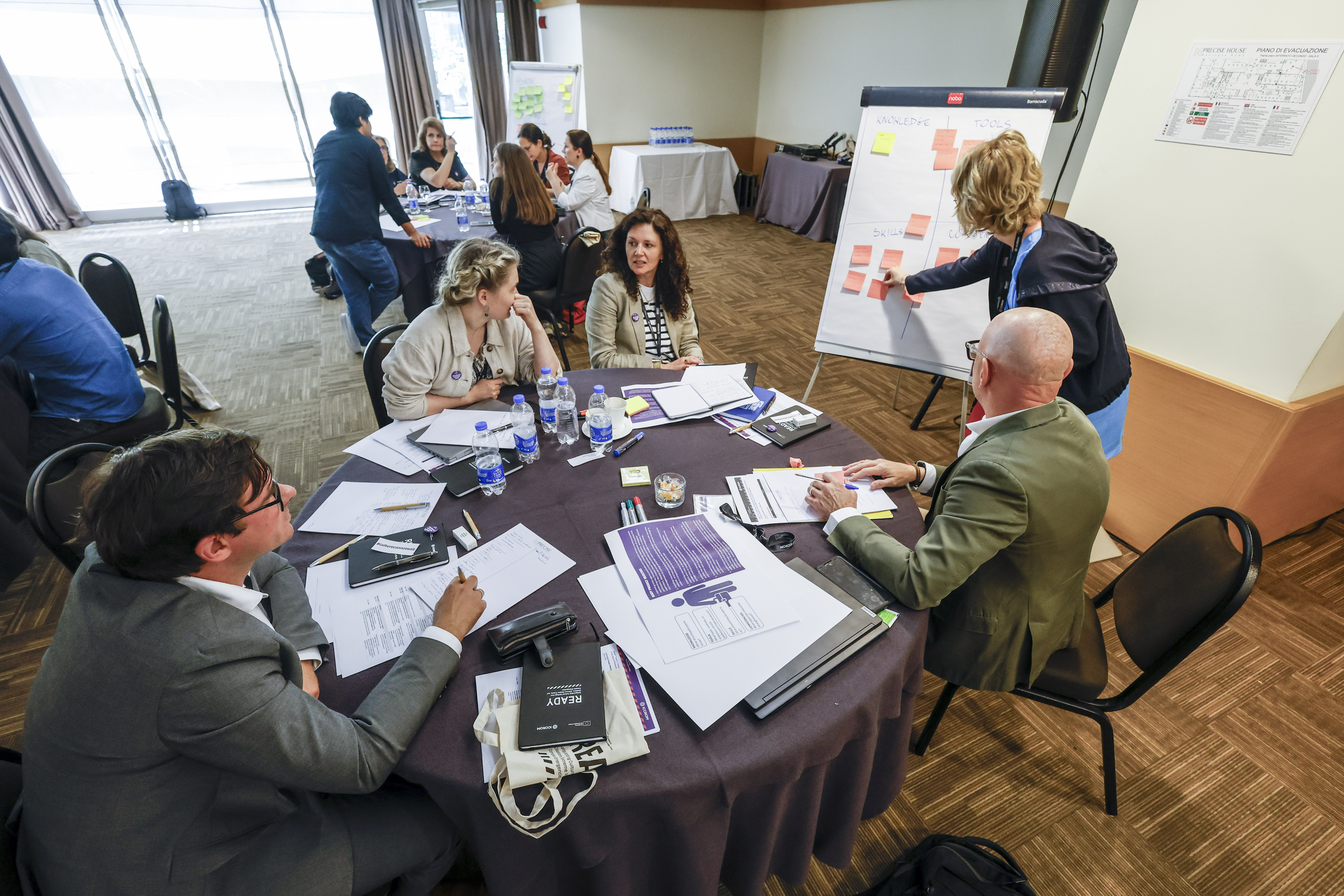
What knowledge, skills, tools, and competencies are needed to prepare a new cohort of heritage risk managers and cultural first aiders to safeguard heritage cities, sites, buildings, living traditions, and practices in increasingly complex risk environments?
Bringing together expertise in cultural heritage conservation, disaster risk reduction, emergency preparedness, engineering, climate adaptation, governance, and post-crisis recovery, the meeting became more than a curriculum co-designing exercise. It served as a collaborative space to exchange experiences, bridge disciplinary perspectives, and reflect collectively on the competencies needed to strengthen preparedness and resilience for cultural heritage in a rapidly changing risk landscape.
Discussions highlighted the need for a clear shift in emphasis: from reactive emergency response towards more anticipatory, risk-informed, and people-centred preparedness. Partners and area specialists also underscored the importance of understanding heritage as a living process shaped by the interaction of people, places, knowledge systems, and cultural practices — where tangible and intangible dimensions of heritage are deeply interconnected.
Key Takeaways
Across the two-day meeting, several priorities emerged that will shape the development of READY Track 2:
Heritage must be understood within its wider context — recognizing how social, environmental, economic, and governance pressures shape both heritage and the risks affecting it.
Preparedness should become part of everyday heritage management through planning, documentation, coordination, and regular practice — not activated only during emergencies.
Future professionals must strengthen their capacities to assess and prioritize multi-hazard, cascading, and uncertain risk environments.
Effective safeguarding depends on stronger coordination across heritage professionals, civil protection authorities, local governments, emergency responders, technical experts, and communities.
Documentation, data collection, and information management are essential for risk assessment, preparedness, and informed decision-making.
Tools such as rapid assessments, GIS, spatial analysis, risk visualization, and digital tools can strengthen how risks are understood, analysed, and addressed - when used at the right time and in ways that remain accessible, practical, and fit for purpose before, during, and after crises.
Heritage risk managers and cultural first aiders require leadership, communication, adaptability, and the ability to work across disciplines and sectors.
Communities, living traditions, and intangible heritage are central to the meaning, continuity, and resilience of historic places.
Finally, immersive, practical and scenario-based learning is essential to strengthening operational capacity in increasingly complex crises.
Together, these insights informed the development of a curriculum framework conceived not as a linear sequence, but as an iterative and reinforcing learning process: the framework moves through risk assessment, preparedness, first aid, emergency response, recovery, and resilience-building, recognizing that each phase continuously informs the next.
Strong emphasis will be placed on simulations, field exercises, peer exchange, and real-world case studies to strengthen operational capacity.
From Crisis to Recovery: Lessons from L’Aquila
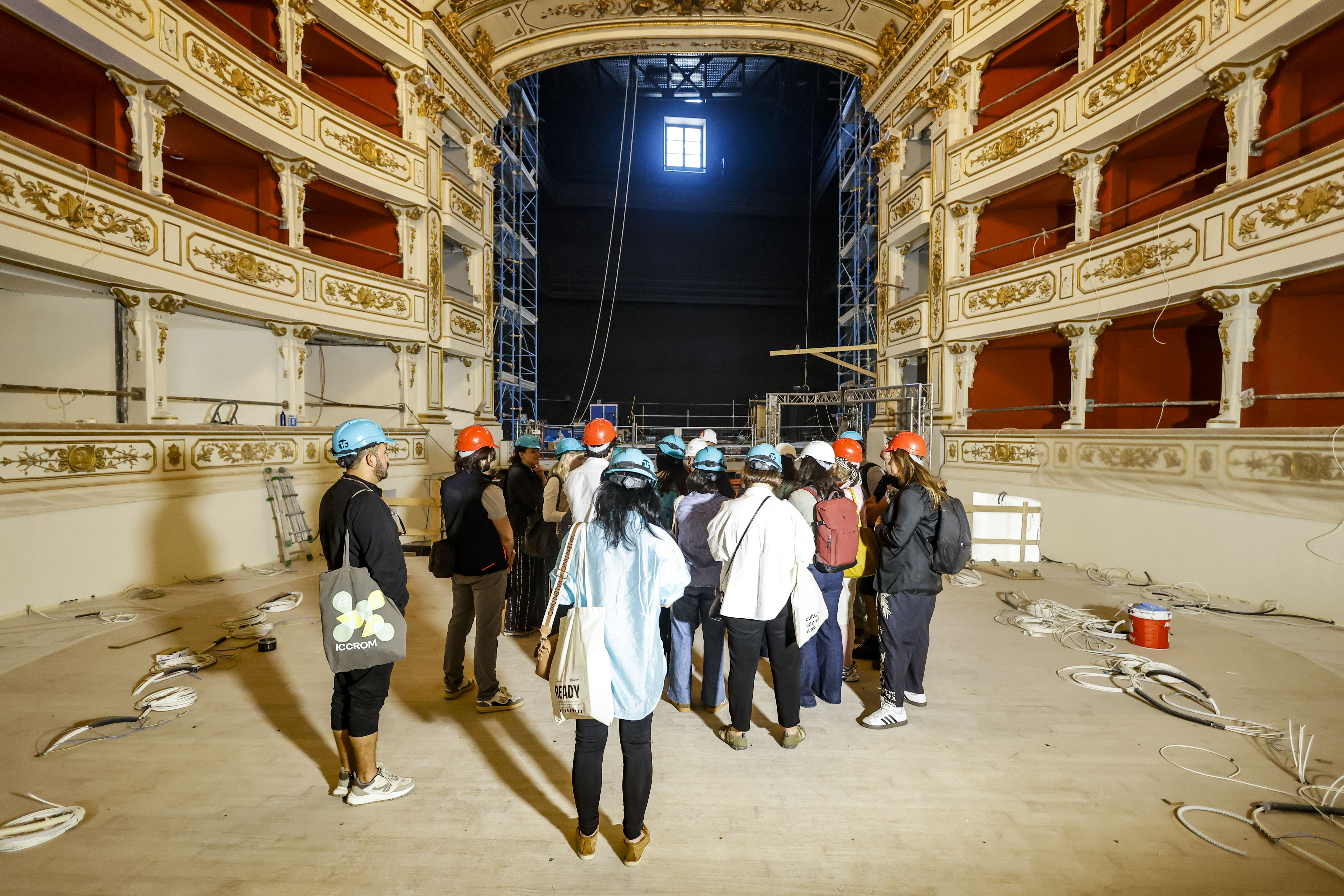
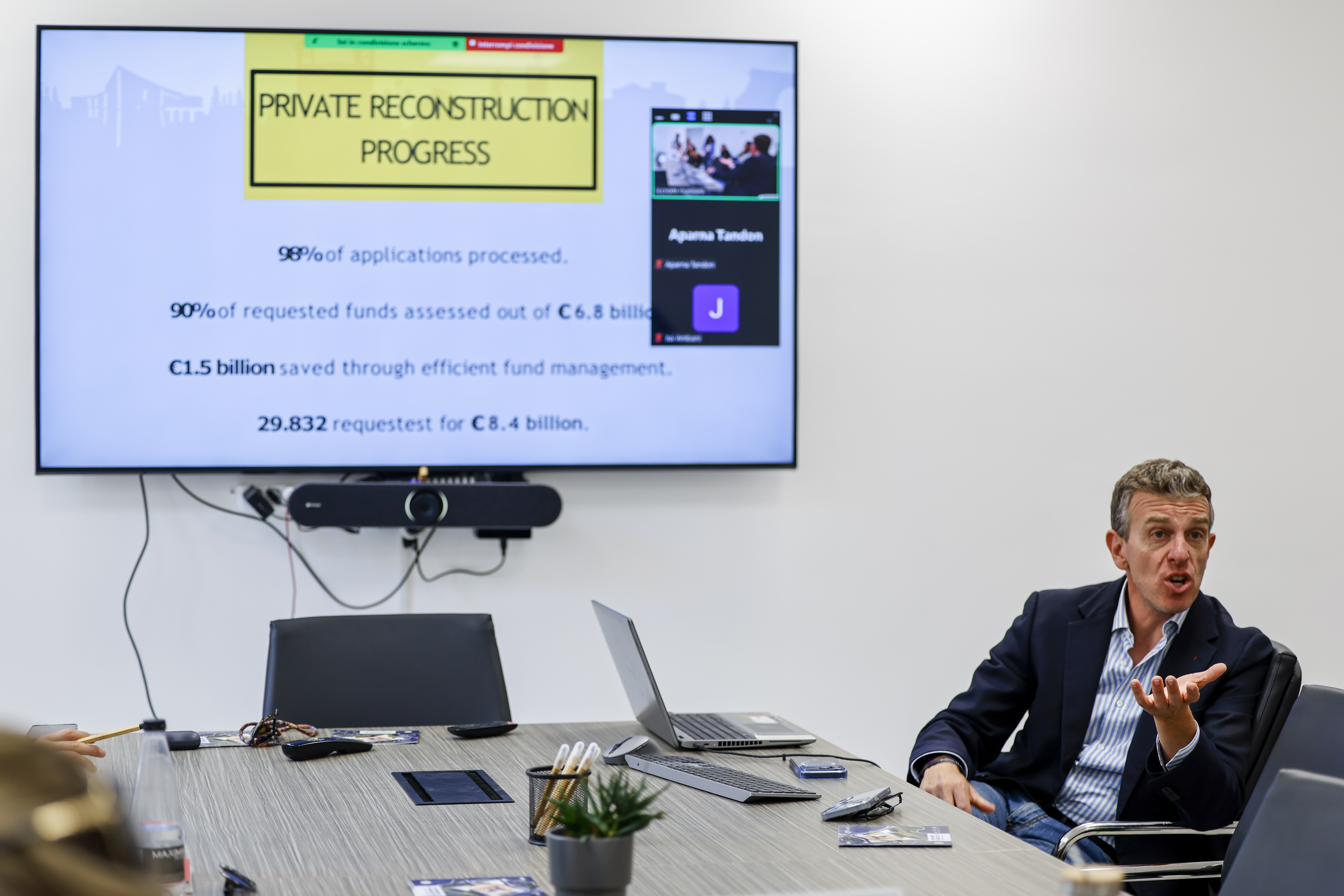
The second day of the meeting moved beyond the meeting room to the historic city of L’Aquila, Italy, where partners and area specialists explored post-earthquake recovery efforts and ongoing rehabilitation processes. Hosted with the support of the Ufficio Speciale per la Ricostruzione dell’Aquila (USRA), the visit turned the city itself into a living classroom for reflection and learning.
Welcomed by local leadership and specialists involved in reconstruction, the group examined how recovery has evolved since the devastating 2009 earthquake. Discussions reflected on the complexities of balancing structural safety, authenticity, urban regeneration, and community needs.
A visit to the Teatro Comunale dell’Aquila, where restoration and rehabilitation work continue, offered a powerful example of how safeguarding heritage supports not only physical recovery, but also the rebuilding of social life, collective identity, and cultural continuity. More than restoring buildings, L’Aquila demonstrated how post-crisis recovery reconnects communities to place, memory, and belonging.
For READY partners, the city became more than a case study. It reinforced a central reflection of the curriculum design process: preparedness, emergency response, and long-term recovery cannot be separated. Decisions made before disaster strikes fundamentally shape what is possible afterward.
Looking Ahead
READY Track 2 will be hosted by the National Institute of Heritage of Romania. The online foundational training will begin on 22 June 2026, followed by field-based assignments in which participants will apply the knowledge, skills and methods within their own professional contexts.
The cohort will then reconvene for in-person training in Bucharest from 7–20 September 2026.
Through READY, ICCROM and its partners continue to strengthen capacities for more anticipatory, integrated, and people-centred approaches to safeguarding cultural heritage. By investing in the next generation of risk managers, the initiative supports both its heritage and the communities connected to it in preparing to face increasingly complex and interconnected crises.