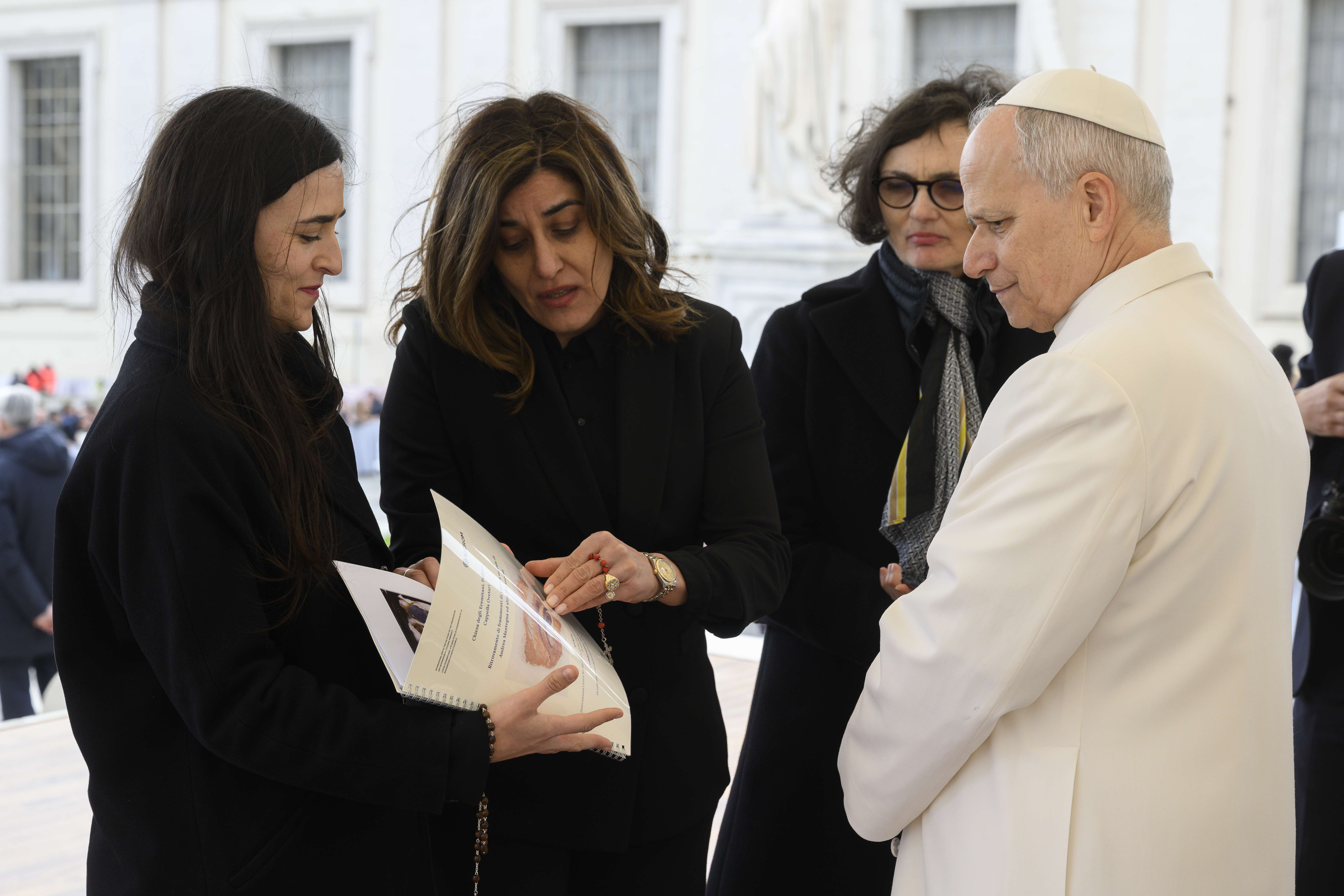
Fragments of frescoes once thought lost to wartime destruction, have been rediscovered in ICCROM’s Archives, revealing a remarkable chapter of artistic survival and recovery.
ICCROM Director-General Aruna Francesca Maria Gujral was received in audience by His Holiness Pope Leo XIV, where she had the honour of revealing this extraordinary discovery emerging from the Organization’s archival collections.
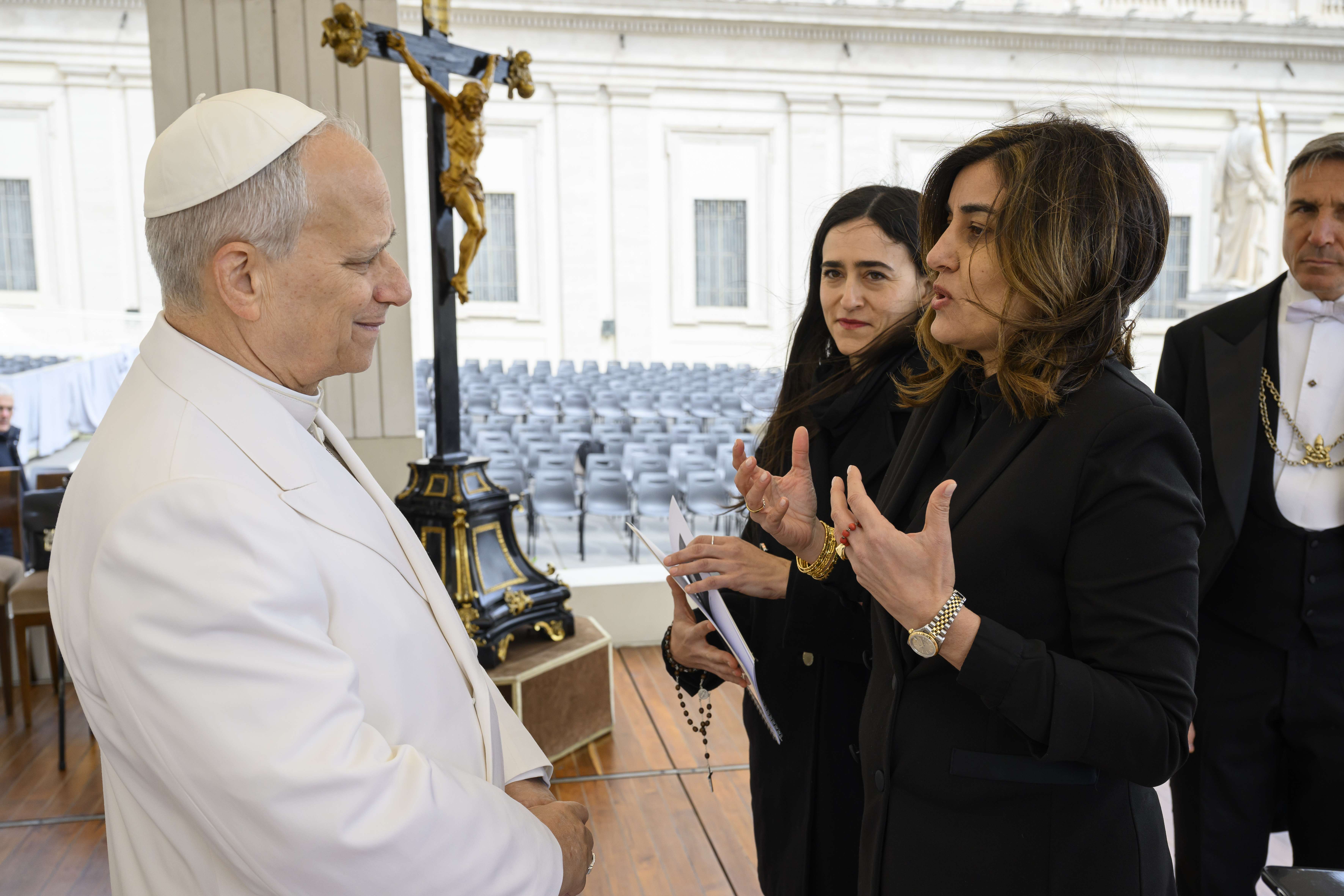
The find consists of thirty-one pieces of mural painting dating from the 14th and 15th centuries. They were recently identified by ICCROM’s Experts through archival research as part of an ongoing documentation work on materials preserved in the ICCROM Archives undertaken with the support of SUPSI University.
Among the fragments, 12 have been attributed to the Ovetari Chapel of the Eremitani Church in Padua, decorated by Andrea Mantegna and other prominent painters of the period. These include fragments of the apsidal tribune by Andrea Mantegna (depicting Saint Peter and Saint Christopher) and Nicolò Pizzolo (depicting Saint Augustine and the Eternal Father Blessing), as well as fragments of the vault painted by Antonio Vivarini and Giovanni d’Alemagna (depicting Saint Mark, Saint Luke and Saint Matthew).
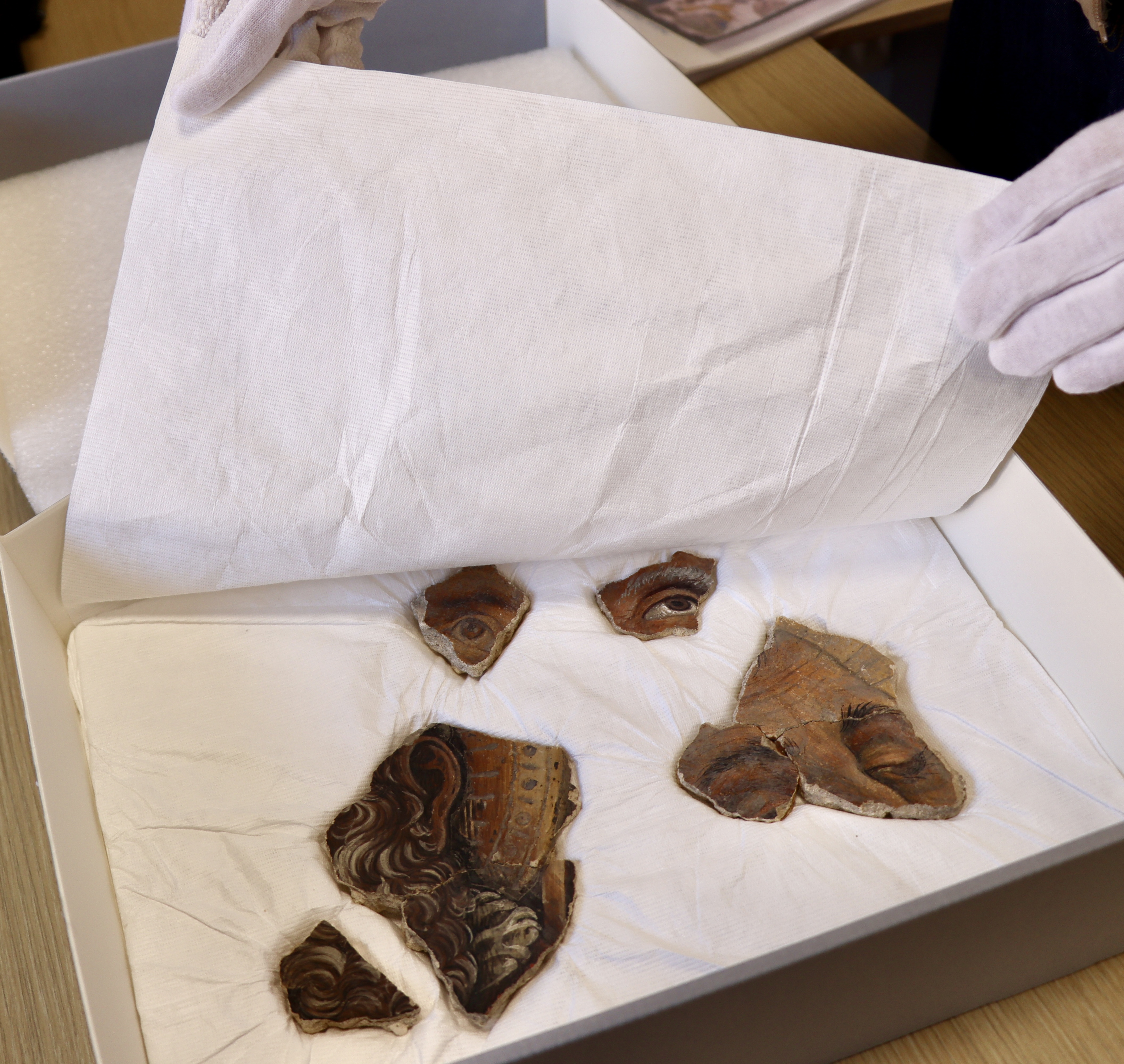
The Ovetari Chapel fresco cycle stands as a masterpiece of the 15th-century Paduan Renaissance. Its legacy, however, is inseparable from tragedy. In 1944, during the Second World War, the church was devastated by bombing, reducing its celebrated frescoes to an estimated 80,000 fragments – one of Italy’s most profound cultural losses of the war.
Today, these rediscovered pieces stand as rare survivors of that destruction. More than fragments, they are carriers of memory – remnants of a sacred space that for centuries nurtured spiritual and communal life within the Augustinian tradition.
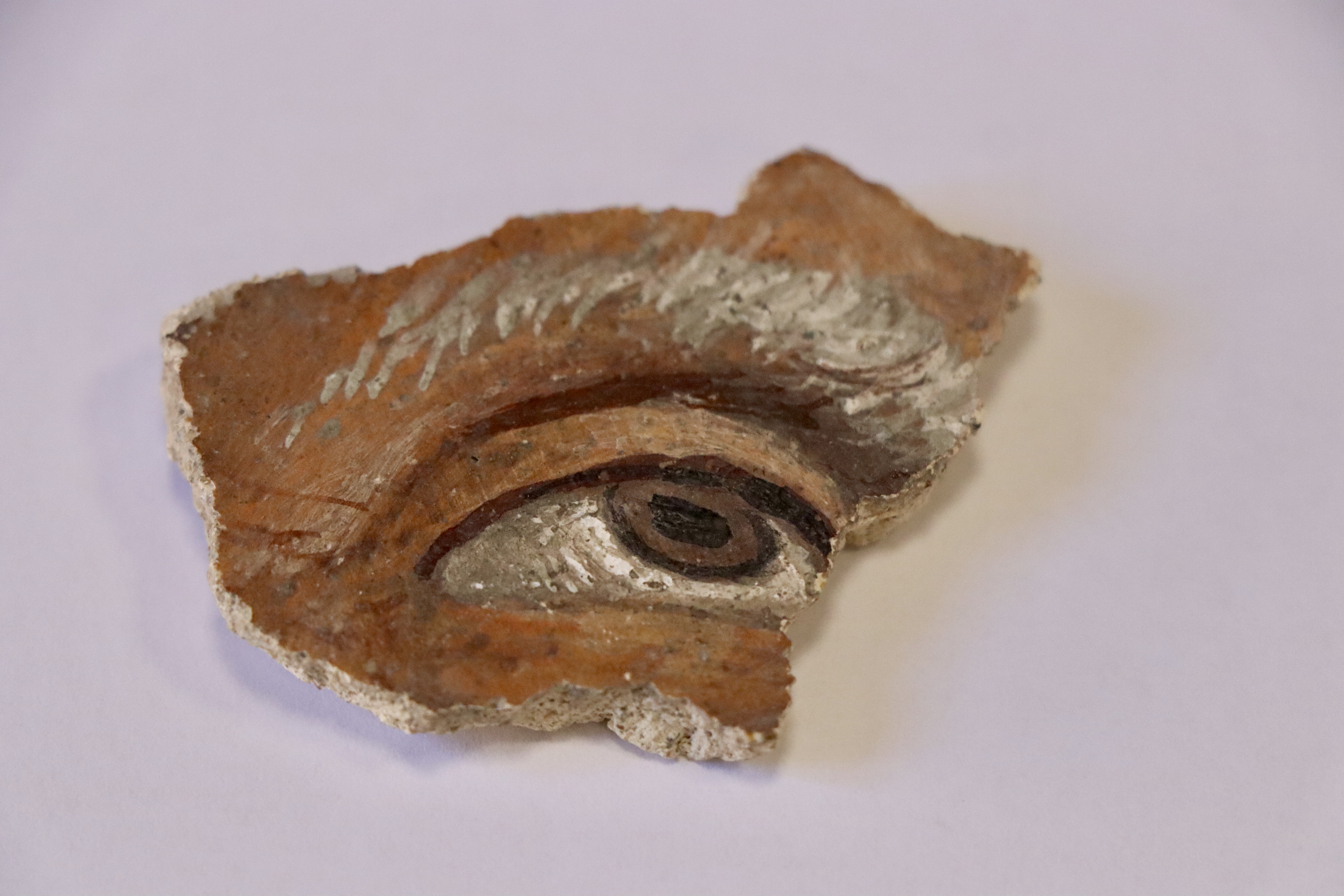
Their presentation to Pope Leo XIV underscores not only their artistic and historical value, but also their intrinsic spiritual power. Emerging from ruin, they testify the resilience of cultural heritage and the enduring capacity of beauty to transcend violence and propel solidarity–echoing the Augustinian ideal: “Cor unum et anima una in Deum” (“One heart and one soul in God”).