A high-level dialogue to strengthen international cooperation in the face of emerging threats to cultural heritage
Illicit trafficking of cultural property is a rapidly evolving global threat that disrupts cultural continuity, fuels transnational criminal networks and strips communities of the heritage that anchors their histories and futures. Despite the safeguards of the 1970 UNESCO Convention and the 1995 UNIDROIT Convention, the problem has intensified, driven by conflict, organized crime, expanding digital marketplaces and persistent implementation gaps.
Growing concern within the international community reflects this shifting landscape. The UN General Assembly’s 2024 Resolution 79/133 underscores the scale and urgency of the issue, calling for stronger cooperation, enhanced capacity building and more ethical restitution practices. It also highlights the need for deeper synergies among global actors and identifies ICCROM as a key partner in the multilateral response.
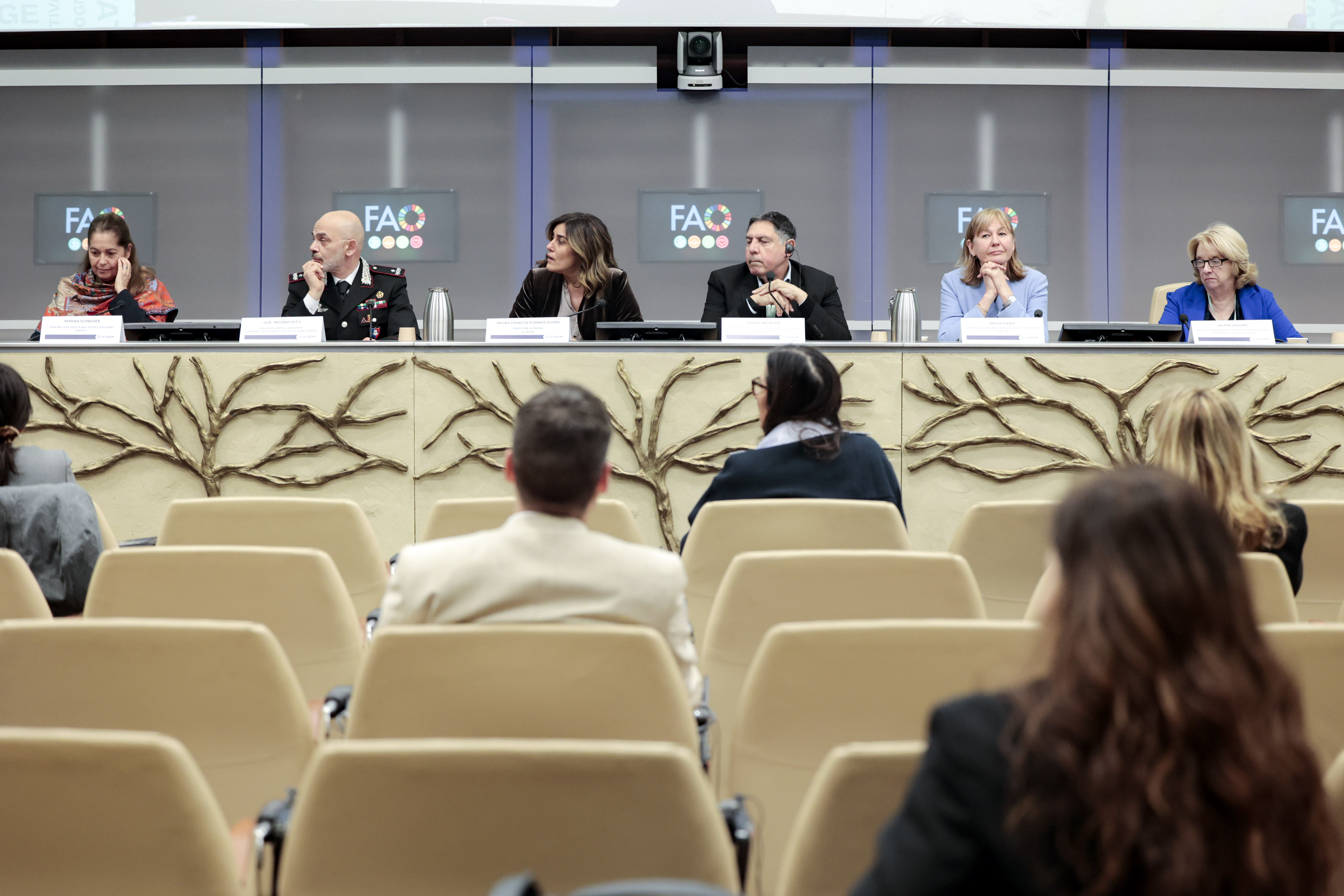
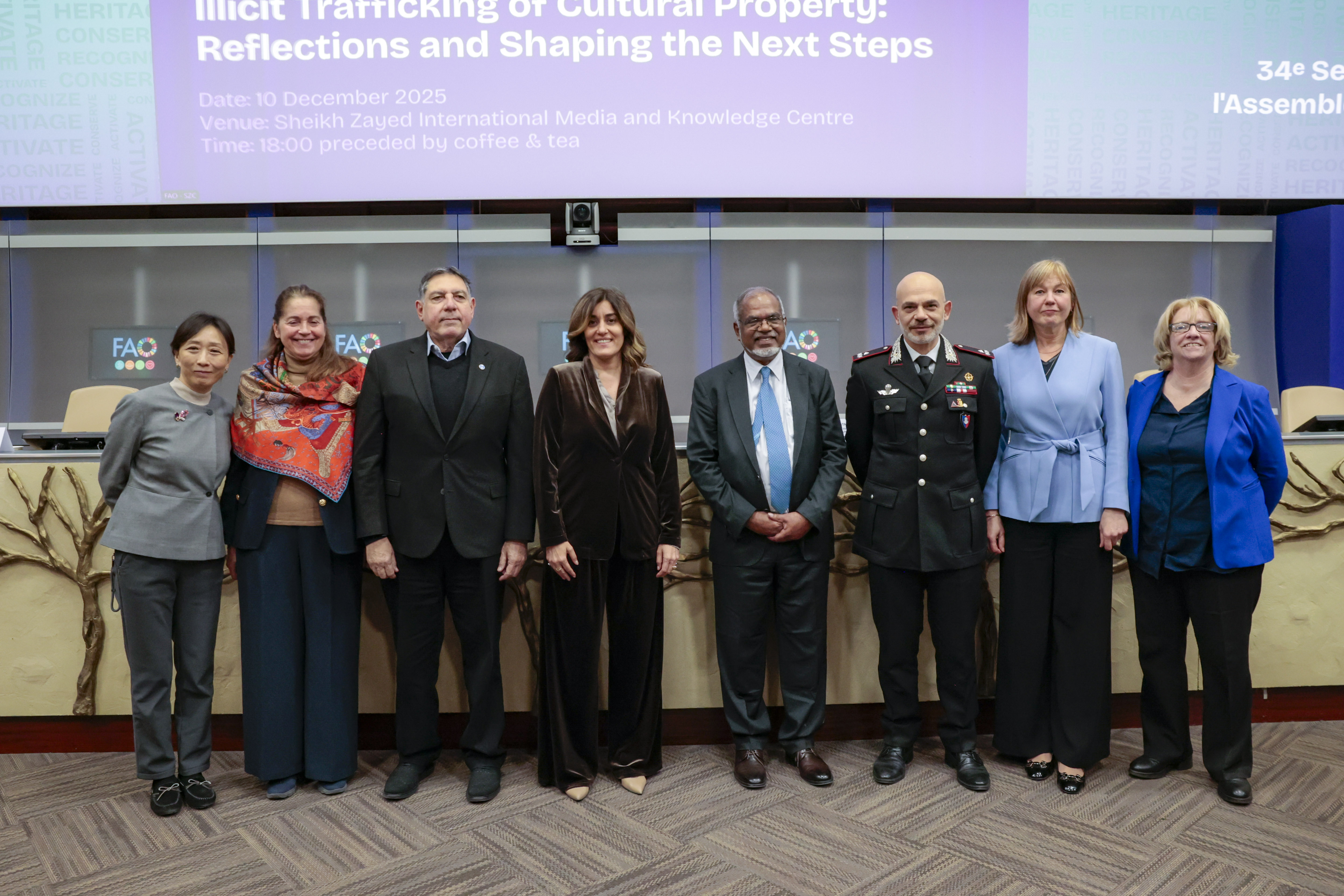
Against this backdrop, ICCROM convened a high-level side event during the 34th Session of its General Assembly, bringing together leading voices from international organizations, law enforcement, academia, professional networks and Member States. The dialogue provided a timely platform to assess emerging trends, align global efforts and define practical next steps.
ICCROM Director-General Aruna Francesca Maria Gujral emphasized that collective action is essential to addressing this escalating threat. She described the session as the start of a shared roadmap to deepen coordination with key partners and strengthen the international community’s ability to respond. “None of us can succeed alone, but all of us can succeed together,” she said. “Illicit trafficking strikes at the heart of cultural identity. It erodes our shared humanity, undermines justice for affected communities, and weakens the foundations of resilient societies. Today’s dialogue marks the beginning of a collective journey – one where education, technology, legal instruments, ethical practices and community engagement must work hand in hand.”
Coinciding with Human Rights Day, the event underscored that illicit trafficking is far more than a criminal activity: it erases identity, violates human rights and diminishes heritage’s cultural meaning.
Speakers noted that traffickers continue to exploit legal loopholes, digital platforms and geopolitical instability. As trafficking grows more complex and transnational, stronger multilateral cooperation supported by modern investigative tools and regional coordination is required.
Emerging technologies, big-data modelling, and AI were cited as promising tools for forecasting trends and enabling early intervention. Enhanced databases, AI-assisted identification, nuclear analysis and digital platforms are increasingly useful for provenance research and preventive action.
Education was identified as a critical mechanism for shaping long-term solutions. Participants emphasized the need to engage wider publics, so they understand that keeping trafficked objects in the home is socially unacceptable and should not be glamorized. They should not be decorative commodities, and reclaiming them is a matter of dignity, memory and belonging. Local communities, it was noted, are the best guardians of their heritage. Education must therefore reach all levels – from frontline practitioners, such as customs officers, to managers – and use accessible formats, including local languages, interactive methods and videogames.
The discussion also highlighted the importance of reinforcing international legal instruments and strengthening synergies between global norms, legislative frameworks, capacity-building initiatives, technological platforms and restitution mechanisms. Panellists welcomed ICCROM’s convening and capacity-building role, and its efforts to unite international actors around a shared vision for cultural resilience.
As the event concluded, the Director-General reaffirmed ICCROM’s commitment to co-designing a joint roadmap and building a coalition of partners aligned with the principles of the UN resolution. By fostering actionable insights and renewed collaboration, ICCROM aims to accelerate global efforts to combat illicit trafficking and support the recovery and return of cultural property – ensuring that heritage remains a living resource for future generations.